Caribeart presents its latest artist series, dedicated to Davin K. Ebanks, a Caymanian sculptor who works with glass and the blue of Grand Cayman's shoreline to explore identity, history and the environment.
This trope is an act of preservation that denies utility, or perhaps reframes what utility means. This translation reflects the way the objects in this exhibition have been transformed, forcing them to oscillate between the familiar and the foreign.
This trope is an act of preservation that denies utility, or perhaps reframes what utility means. This translation reflects the way the objects in this exhibition have been transformed, forcing them to oscillate between the familiar and the foreign.
In my home country, the Cayman Islands, local bananas are the food of the poor, grown in many back yards. By contrast, the cultivated, store-bought banana is a symbol of colonialism and monoculture. Glass fruit baskets adorned the living rooms of many working-class families during my childhood.
This trope is an act of preservation that denies utility, or perhaps reframes what utility means. This translation reflects the way the objects in this exhibition have been transformed, forcing them to oscillate between the familiar and the foreign.
Recently, I have been thinking about bodies moving through blue spaces. As a Caymanian American, my racial identity is tied to the Black people who did not make it across the Atlantic, a people left stranded in the blue space of the Caribbean. The idea of transporting produce and goods became a metaphor for the transport of bodies across blue space between places – from the transatlantic slave trade to trade wars, and on to today’s refugee crises. Bananas and cotton are laden with cultural and political meaning. The banana also has a long history as an artistic subject.
In my home country, the Cayman Islands, local bananas are the food of the poor, grown in many back yards. By contrast, the cultivated, store-bought banana is a symbol of colonialism and monoculture. Glass fruit baskets adorned the living rooms of many working-class families during my childhood.
This trope is an act of preservation that denies utility, or perhaps reframes what utility means. This translation reflects the way the objects in this exhibition have been transformed, forcing them to oscillate between the familiar and the foreign.
It also reminds me of all the nights I spent on the water under a full moon, looking at the sky while my fishing line sank into the darkness. Duality. Light. Darkness. Both, the unknown.
Recently, I have been thinking about bodies moving through blue spaces. As a Caymanian American, my racial identity is tied to the Black people who did not make it across the Atlantic, a people left stranded in the blue space of the Caribbean. The idea of transporting produce and goods became a metaphor for the transport of bodies across blue space between places – from the transatlantic slave trade to trade wars, and on to today’s refugee crises. Bananas and cotton are laden with cultural and political meaning. The banana also has a long history as an artistic subject.
In my home country, the Cayman Islands, local bananas are the food of the poor, grown in many back yards. By contrast, the cultivated, store-bought banana is a symbol of colonialism and monoculture. Glass fruit baskets adorned the living rooms of many working-class families during my childhood.
This trope is an act of preservation that denies utility, or perhaps reframes what utility means. This translation reflects the way the objects in this exhibition have been transformed, forcing them to oscillate between the familiar and the foreign.
I love this title and the way it alludes to how Indigenous peoples lived with the land and the seasons. Our elders (great-grandfathers and so on) did everything by the moon, and more precisely by the tides. They planted according to the tides. They fished with the tides. They cut timber for their boats by the tides. They hunted thanks to the tides. The moon and the breathing of the planet were part of the rhythm of their lives.
It also reminds me of all the nights I spent on the water under a full moon, looking at the sky while my fishing line sank into the darkness. Duality. Light. Darkness. Both, the unknown.
Recently, I have been thinking about bodies moving through blue spaces. As a Caymanian American, my racial identity is tied to the Black people who did not make it across the Atlantic, a people left stranded in the blue space of the Caribbean. The idea of transporting produce and goods became a metaphor for the transport of bodies across blue space between places – from the transatlantic slave trade to trade wars, and on to today’s refugee crises. Bananas and cotton are laden with cultural and political meaning. The banana also has a long history as an artistic subject.
In my home country, the Cayman Islands, local bananas are the food of the poor, grown in many back yards. By contrast, the cultivated, store-bought banana is a symbol of colonialism and monoculture. Glass fruit baskets adorned the living rooms of many working-class families during my childhood.
This trope is an act of preservation that denies utility, or perhaps reframes what utility means. This translation reflects the way the objects in this exhibition have been transformed, forcing them to oscillate between the familiar and the foreign.
My sculptures are metaphors for the subjective nature of identity and personal narrative. I use everyday elements from the culture of the island where I grew up – ripe bananas, woven baskets, seawater and so on – and by translating these subjects into glass, I elevate them from the mundane to the aesthetic.
I love this title and the way it alludes to how Indigenous peoples lived with the land and the seasons. Our elders (great-grandfathers and so on) did everything by the moon, and more precisely by the tides. They planted according to the tides. They fished with the tides. They cut timber for their boats by the tides. They hunted thanks to the tides. The moon and the breathing of the planet were part of the rhythm of their lives.
It also reminds me of all the nights I spent on the water under a full moon, looking at the sky while my fishing line sank into the darkness. Duality. Light. Darkness. Both, the unknown.
Recently, I have been thinking about bodies moving through blue spaces. As a Caymanian American, my racial identity is tied to the Black people who did not make it across the Atlantic, a people left stranded in the blue space of the Caribbean. The idea of transporting produce and goods became a metaphor for the transport of bodies across blue space between places – from the transatlantic slave trade to trade wars, and on to today’s refugee crises. Bananas and cotton are laden with cultural and political meaning. The banana also has a long history as an artistic subject.
In my home country, the Cayman Islands, local bananas are the food of the poor, grown in many back yards. By contrast, the cultivated, store-bought banana is a symbol of colonialism and monoculture. Glass fruit baskets adorned the living rooms of many working-class families during my childhood.
This trope is an act of preservation that denies utility, or perhaps reframes what utility means. This translation reflects the way the objects in this exhibition have been transformed, forcing them to oscillate between the familiar and the foreign.
Since the “water” has been transplanted onto the gallery floor, it was important to me to anchor each piece to its referent. Each location is referenced by the longitudinal coordinates in the title, underscoring their displaced nature. This invites viewers to imagine the water of the places they have been, perhaps a cruise or a childhood holiday.
My sculptures are metaphors for the subjective nature of identity and personal narrative. I use everyday elements from the culture of the island where I grew up – ripe bananas, woven baskets, seawater and so on – and by translating these subjects into glass, I elevate them from the mundane to the aesthetic.
I love this title and the way it alludes to how Indigenous peoples lived with the land and the seasons. Our elders (great-grandfathers and so on) did everything by the moon, and more precisely by the tides. They planted according to the tides. They fished with the tides. They cut timber for their boats by the tides. They hunted thanks to the tides. The moon and the breathing of the planet were part of the rhythm of their lives.
It also reminds me of all the nights I spent on the water under a full moon, looking at the sky while my fishing line sank into the darkness. Duality. Light. Darkness. Both, the unknown.
Recently, I have been thinking about bodies moving through blue spaces. As a Caymanian American, my racial identity is tied to the Black people who did not make it across the Atlantic, a people left stranded in the blue space of the Caribbean. The idea of transporting produce and goods became a metaphor for the transport of bodies across blue space between places – from the transatlantic slave trade to trade wars, and on to today’s refugee crises. Bananas and cotton are laden with cultural and political meaning. The banana also has a long history as an artistic subject.
In my home country, the Cayman Islands, local bananas are the food of the poor, grown in many back yards. By contrast, the cultivated, store-bought banana is a symbol of colonialism and monoculture. Glass fruit baskets adorned the living rooms of many working-class families during my childhood.
This trope is an act of preservation that denies utility, or perhaps reframes what utility means. This translation reflects the way the objects in this exhibition have been transformed, forcing them to oscillate between the familiar and the foreign.
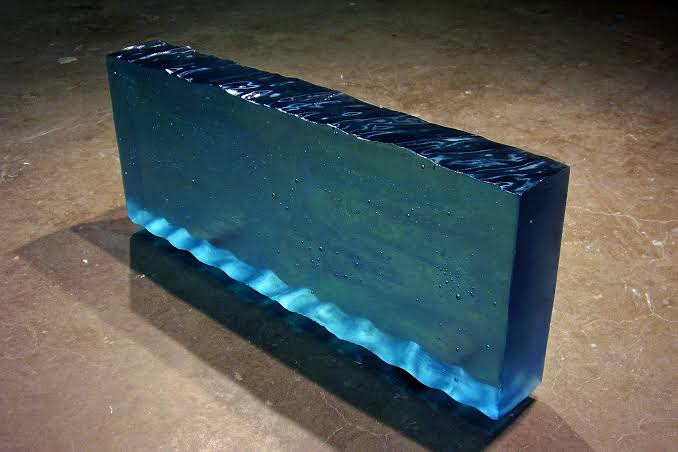
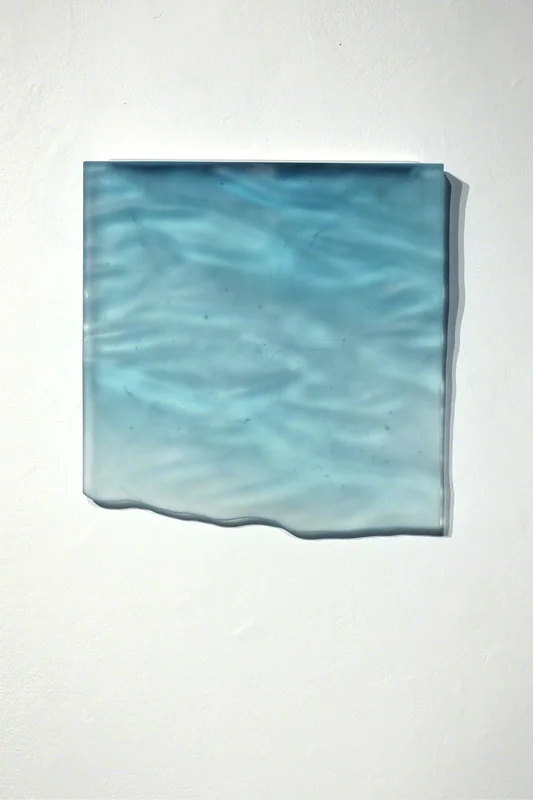
The Blue Meridian series was inspired by the water around my home country, the Cayman Islands. Specificity matters, the specificity of colour. To the average person, water is water, but to an islander, the colour of the water conveys information about depth, the makeup of the seabed, salinity and resident species.
Since the “water” has been transplanted onto the gallery floor, it was important to me to anchor each piece to its referent. Each location is referenced by the longitudinal coordinates in the title, underscoring their displaced nature. This invites viewers to imagine the water of the places they have been, perhaps a cruise or a childhood holiday.
My sculptures are metaphors for the subjective nature of identity and personal narrative. I use everyday elements from the culture of the island where I grew up – ripe bananas, woven baskets, seawater and so on – and by translating these subjects into glass, I elevate them from the mundane to the aesthetic.
I love this title and the way it alludes to how Indigenous peoples lived with the land and the seasons. Our elders (great-grandfathers and so on) did everything by the moon, and more precisely by the tides. They planted according to the tides. They fished with the tides. They cut timber for their boats by the tides. They hunted thanks to the tides. The moon and the breathing of the planet were part of the rhythm of their lives.
It also reminds me of all the nights I spent on the water under a full moon, looking at the sky while my fishing line sank into the darkness. Duality. Light. Darkness. Both, the unknown.
Recently, I have been thinking about bodies moving through blue spaces. As a Caymanian American, my racial identity is tied to the Black people who did not make it across the Atlantic, a people left stranded in the blue space of the Caribbean. The idea of transporting produce and goods became a metaphor for the transport of bodies across blue space between places – from the transatlantic slave trade to trade wars, and on to today’s refugee crises. Bananas and cotton are laden with cultural and political meaning. The banana also has a long history as an artistic subject.
In my home country, the Cayman Islands, local bananas are the food of the poor, grown in many back yards. By contrast, the cultivated, store-bought banana is a symbol of colonialism and monoculture. Glass fruit baskets adorned the living rooms of many working-class families during my childhood.
This trope is an act of preservation that denies utility, or perhaps reframes what utility means. This translation reflects the way the objects in this exhibition have been transformed, forcing them to oscillate between the familiar and the foreign.
“Blue Meridian: 81.2ºW, Old Isaac’s” Cast, Blasted & Polished Glass, 36”H x 15”W x 4”D, 2009
The Blue Meridian series was inspired by the water around my home country, the Cayman Islands. Specificity matters, the specificity of colour. To the average person, water is water, but to an islander, the colour of the water conveys information about depth, the makeup of the seabed, salinity and resident species.
Since the “water” has been transplanted onto the gallery floor, it was important to me to anchor each piece to its referent. Each location is referenced by the longitudinal coordinates in the title, underscoring their displaced nature. This invites viewers to imagine the water of the places they have been, perhaps a cruise or a childhood holiday.
My sculptures are metaphors for the subjective nature of identity and personal narrative. I use everyday elements from the culture of the island where I grew up – ripe bananas, woven baskets, seawater and so on – and by translating these subjects into glass, I elevate them from the mundane to the aesthetic.
I love this title and the way it alludes to how Indigenous peoples lived with the land and the seasons. Our elders (great-grandfathers and so on) did everything by the moon, and more precisely by the tides. They planted according to the tides. They fished with the tides. They cut timber for their boats by the tides. They hunted thanks to the tides. The moon and the breathing of the planet were part of the rhythm of their lives.
It also reminds me of all the nights I spent on the water under a full moon, looking at the sky while my fishing line sank into the darkness. Duality. Light. Darkness. Both, the unknown.
Recently, I have been thinking about bodies moving through blue spaces. As a Caymanian American, my racial identity is tied to the Black people who did not make it across the Atlantic, a people left stranded in the blue space of the Caribbean. The idea of transporting produce and goods became a metaphor for the transport of bodies across blue space between places – from the transatlantic slave trade to trade wars, and on to today’s refugee crises. Bananas and cotton are laden with cultural and political meaning. The banana also has a long history as an artistic subject.
In my home country, the Cayman Islands, local bananas are the food of the poor, grown in many back yards. By contrast, the cultivated, store-bought banana is a symbol of colonialism and monoculture. Glass fruit baskets adorned the living rooms of many working-class families during my childhood.
This trope is an act of preservation that denies utility, or perhaps reframes what utility means. This translation reflects the way the objects in this exhibition have been transformed, forcing them to oscillate between the familiar and the foreign.
Davin K. Ebanks is a Caymanian artist and sculptor. The colour blue is at the heart of his work, particularly as a stand-in for the water along Grand Cayman’s shoreline. He works mainly in glass to explore his personal and cultural history and to examine the relationship between identity and environment. Caribeart is pleased to present Ebanks for its latest artist series.
“Blue Meridian: 81.2ºW, Old Isaac’s” Cast, Blasted & Polished Glass, 36”H x 15”W x 4”D, 2009
The Blue Meridian series was inspired by the water around my home country, the Cayman Islands. Specificity matters, the specificity of colour. To the average person, water is water, but to an islander, the colour of the water conveys information about depth, the makeup of the seabed, salinity and resident species.
Since the “water” has been transplanted onto the gallery floor, it was important to me to anchor each piece to its referent. Each location is referenced by the longitudinal coordinates in the title, underscoring their displaced nature. This invites viewers to imagine the water of the places they have been, perhaps a cruise or a childhood holiday.
My sculptures are metaphors for the subjective nature of identity and personal narrative. I use everyday elements from the culture of the island where I grew up – ripe bananas, woven baskets, seawater and so on – and by translating these subjects into glass, I elevate them from the mundane to the aesthetic.
I love this title and the way it alludes to how Indigenous peoples lived with the land and the seasons. Our elders (great-grandfathers and so on) did everything by the moon, and more precisely by the tides. They planted according to the tides. They fished with the tides. They cut timber for their boats by the tides. They hunted thanks to the tides. The moon and the breathing of the planet were part of the rhythm of their lives.
It also reminds me of all the nights I spent on the water under a full moon, looking at the sky while my fishing line sank into the darkness. Duality. Light. Darkness. Both, the unknown.
Recently, I have been thinking about bodies moving through blue spaces. As a Caymanian American, my racial identity is tied to the Black people who did not make it across the Atlantic, a people left stranded in the blue space of the Caribbean. The idea of transporting produce and goods became a metaphor for the transport of bodies across blue space between places – from the transatlantic slave trade to trade wars, and on to today’s refugee crises. Bananas and cotton are laden with cultural and political meaning. The banana also has a long history as an artistic subject.
In my home country, the Cayman Islands, local bananas are the food of the poor, grown in many back yards. By contrast, the cultivated, store-bought banana is a symbol of colonialism and monoculture. Glass fruit baskets adorned the living rooms of many working-class families during my childhood.
This trope is an act of preservation that denies utility, or perhaps reframes what utility means. This translation reflects the way the objects in this exhibition have been transformed, forcing them to oscillate between the familiar and the foreign.

 education